

Unser Firmenlogo
Unser Firmenlogo

VBA Logo


24/7 towing service hotline +49 (0) 331 601 55 13


  • LKW Bergung
    Recovery service Potsdam
  • PKW Bergung
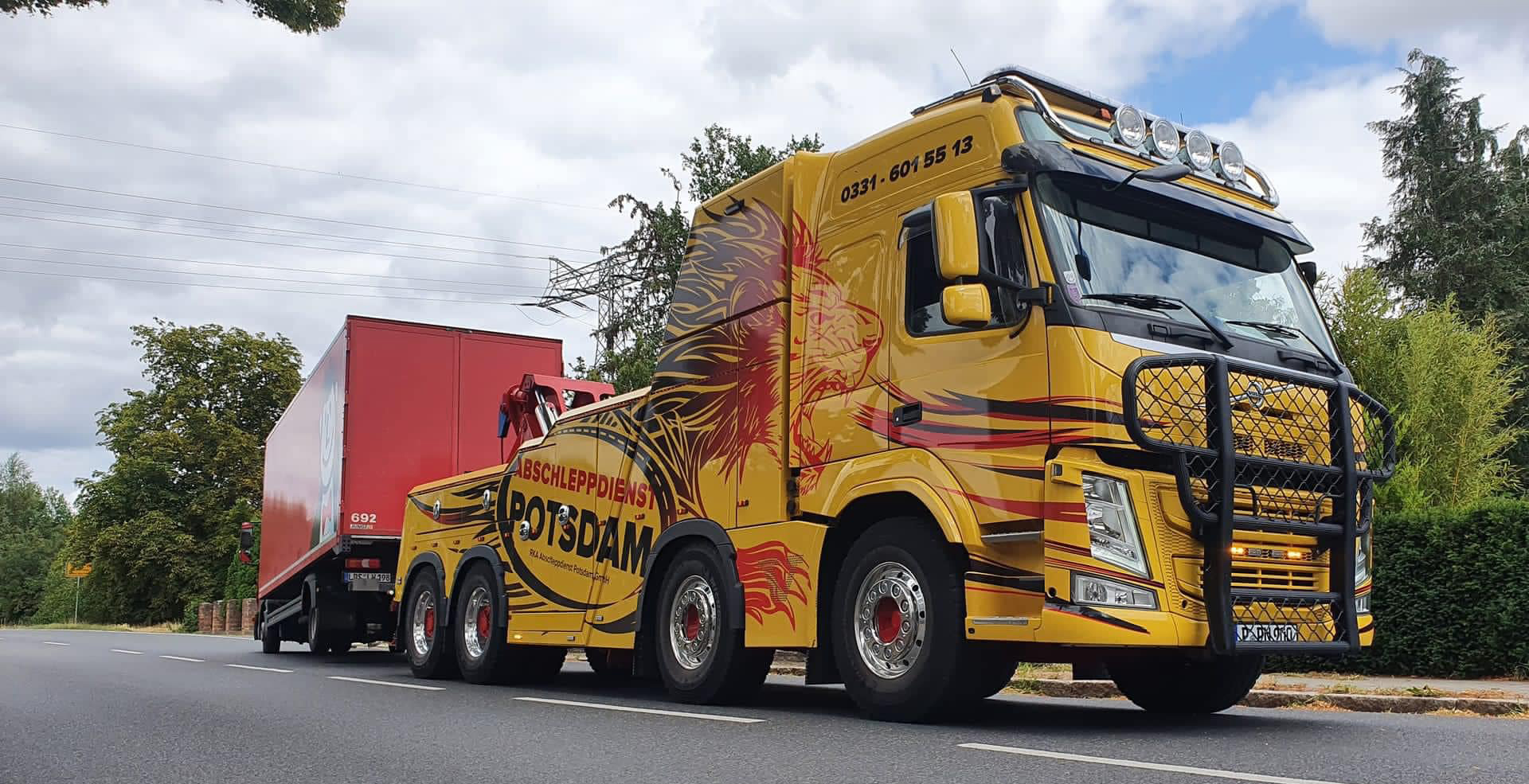
    Heavy recovery service Potsdam
  • Überführungen
    Heavy towing and recovery Potsdam

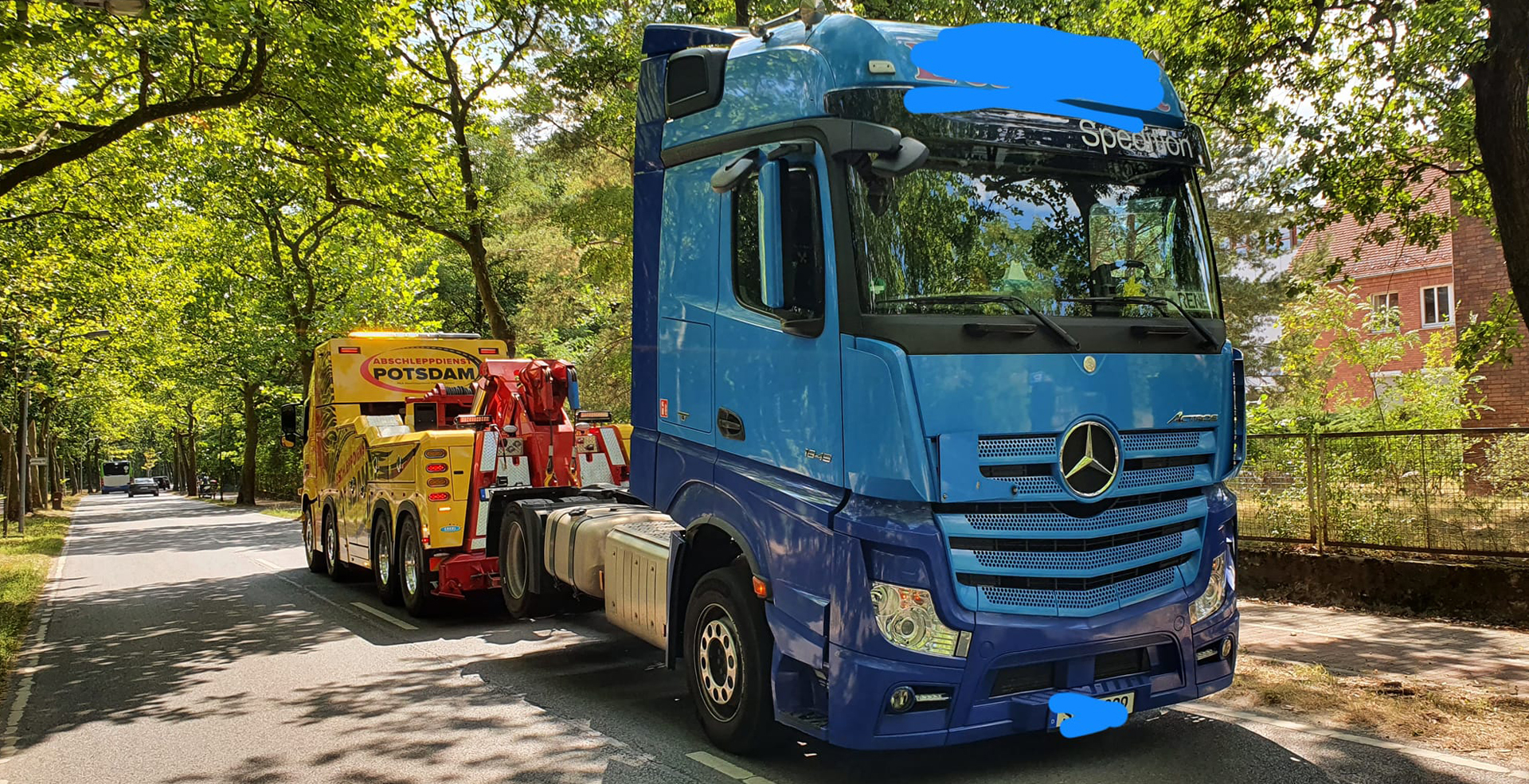
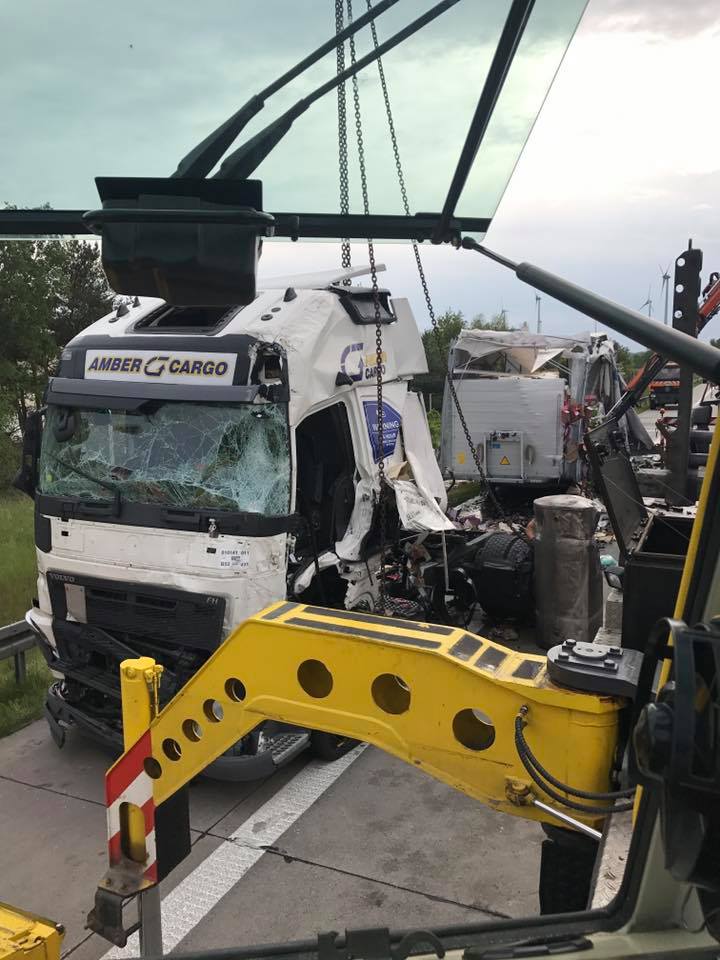
Truck accident in Potsdam

Towing service & procedure (RKA Potsdam)

If a truck is no longer roadworthy after an accident, one thing matters above all: securing the scene and fast, technically sound recovery to protect traffic, cargo, and the environment and to clear the roadway as quickly as possible. RKA Abschleppdienst Potsdam provides support 24/7 – from site protection to heavy recovery, including crane/winch technology and documentation.


Immediate actions for drivers / dispatch

  • Personal safety first: hazard lights, high-visibility vest, secure the area – and avoid the danger zone (especially with cargo/leaks).
  • Call emergency services (112) in case of injuries, fire, leaking operating fluids/hazardous goods.
  • Provide precise location details: motorway/federal road, direction of travel, kilometre marker, next exit, landmarks. (RKA typically requests this information.)
    abschleppdienstpotsdam.com
  • Collect key facts: vehicle type (articulated truck/rigid with trailer), loaded/unloaded, type of cargo, axle/steering capability, hazardous materials, whether the vehicle is in a ditch or overturned.


RKA Potsdam – contact & service area

RKA Abschleppdienst Potsdam GmbH
Am Silbergraben 20, 14480 Potsdam


24/7 emergency line: 0331 601 55 13

Mobile: 0172 167 13 06

E-mail: This email address is being protected from spambots. You need JavaScript enabled to view it.


Region Potsdam & main routes:

Potsdam and districts, including Werder (Havel), Michendorf, Nuthetal, Beelitz, Schwielowsee, Teltow/Kleinmachnow/Stahnsdorf as well as A10 (Berlin Ring), A9, B1/B2/B273.


Procedure after a truck accident – from dispatch to handover

1) Emergency call / assignment & dispatch

  • Collection of incident data (location, situation, vehicle, cargo, hazards).
  • Operational planning: selection of personnel, safety concept, and equipment (e.g. heavy recovery vehicle, winches, crane, air cushions, special rigging).
  • Coordination with authorities/emergency services if traffic lanes or public space are affected (police/fire brigade/road authority).

2) Arrival & site securing

  • Securing the accident site (traffic and hazard area) – in cooperation with police/fire services. SSM
  • Key occupational safety rule: No persons in the danger zone of ropes/chains/winches; secure recovery vehicles against tipping or rolling. SSM Arbeit Safety

3) Situation assessment & recovery planning (decisive for damage-minimised operations)

On site, the following is assessed systematically:

  • Vehicle position: on wheels, in ditch, embankment, guardrail, rollover/overturn, frame/trailer tension.
  • Roadworthiness: rollable/steerable or not (determines towing vs. recovery/loading). DGUV publications
  • Cargo: type, weight, centre of gravity, load securing, risk of shifting/leakage (possible transloading/cargo recovery).
  • Environmental/hazard situation: diesel/oil, coolant, battery/HV systems, fire risk, unstable ground.

4) Technical execution: recovery / uprighting / loading / transport

Depending on the situation, one or more methods are combined:

A) “Standard” towing (if fundamentally rollable/steerable or technically preparable)

  • Towing preparation (e.g. checking axles/steering, securing loose parts, technical measures for damage-minimised transport). RKA also offers towing preparation and transport to workshop/desired destination.

B) Recovery (if not rollable/steerable, in ditch/on embankment, stuck, heavily damaged)

  • DGUV definition: uprighting, pulling out and loading (including by crane) of vehicles that are no longer rollable and/or steerable. DGUV publications
  • Use of heavy recovery vehicles, rope and winch systems and – depending on the situation – crane and air cushion systems.

C) Uprighting overturned trucks (controlled, shock-free, with load management)
RKA typically describes the process in four steps:

  1. Securing & analysis (risk of sliding movements/leaks/unstable cargo)
  2. Selection of technology (crane, winch, pulleys, rigging)
  3. Step-by-step uprighting & stabilisation
  4. Transport & completion work (transloading/cleaning/documentation if required)

D) Crane & winch technology (when space/ground/loads require it)

  • Suitable for overturned/fallen vehicles, limited space, unstable ground, or when standard tow trucks are insufficient.
  • Typical components: winch(es) with redirection, controlled load movement, rigging/lifting gear, possibly a mobile crane.

Core safety points during technical operations (critical due to highest risk):

  • No one in the danger zone of pulling equipment (rope/chain/winch).
  • Secure recovery vehicles against tipping/rolling; when traffic is affected, coordinate with police/road authority. SSM Arbeit Safety

5) Clearance, cleaning, traffic release

  • Objective: rapid reopening of the roadway (identified by RKA as a key service component).
  • Important practical note from towing guidelines: Larger cleaning measures (e.g. wet cleaning/sweeper) are often decided by authorities and are not automatically part of a standard assignment. abschleppzentrale.de

6) Handover & documentation

  • Handover to workshop, depot, impound lot, or destination of choice; upon request, operation documentation for insurers.


Read more: Technical procedures


VBA Logo


Einsatz auf der Strasse


Our Services

  • Breakdown service
  • Fast restoration of vehicle operability using on-board equipment directly on site. For this reason, all our response vehicles in the car sector are equipped both as breakdown service vehicles and as tow trucks.
  • Recovery operations
  • The recovery of accident-damaged vehicles that have left the roadway, for example from ditches. For these operations, we usually deploy a crane for car recoveries or a specialized four-axle recovery vehicle for truck recoveries.
  • Towing service
  • Whether it is a car, van, a complete articulated truck, or a heavy transport vehicle, we have the right vehicle, skilled personnel, and suitable equipment on hand for every task and challenge. Modern loading systems ensure fast and uncomplicated loading and transportation after an accident or breakdown.

24/7 emergency hotline

Icon Notruf

Truck accident in Potsdam

Towing service & procedure (RKA Potsdam)

If a truck is no longer roadworthy after an accident, one thing matters above all: securing the scene and fast, technically sound recovery to protect traffic, cargo, and the environment and to clear the roadway as quickly as possible. RKA Abschleppdienst Potsdam provides support 24/7 – from site protection to heavy recovery, including crane/winch technology and documentation.


Immediate actions for drivers / dispatch

  • Personal safety first: hazard lights, high-visibility vest, secure the area – and avoid the danger zone (especially with cargo/leaks).
  • Call emergency services (112) in case of injuries, fire, leaking operating fluids/hazardous goods.
  • Provide precise location details: motorway/federal road, direction of travel, kilometre marker, next exit, landmarks. (RKA typically requests this information.)
    abschleppdienstpotsdam.com
  • Collect key facts: vehicle type (articulated truck/rigid with trailer), loaded/unloaded, type of cargo, axle/steering capability, hazardous materials, whether the vehicle is in a ditch or overturned.


RKA Potsdam – contact & service area

RKA Abschleppdienst Potsdam GmbH
Am Silbergraben 20, 14480 Potsdam


24/7 emergency line: 0331 601 55 13

Mobile: 0172 167 13 06

E-mail: This email address is being protected from spambots. You need JavaScript enabled to view it.


Region Potsdam & main routes:

Potsdam and districts, including Werder (Havel), Michendorf, Nuthetal, Beelitz, Schwielowsee, Teltow/Kleinmachnow/Stahnsdorf as well as A10 (Berlin Ring), A9, B1/B2/B273.


Procedure after a truck accident – from dispatch to handover

1) Emergency call / assignment & dispatch

  • Collection of incident data (location, situation, vehicle, cargo, hazards).
  • Operational planning: selection of personnel, safety concept, and equipment (e.g. heavy recovery vehicle, winches, crane, air cushions, special rigging).
  • Coordination with authorities/emergency services if traffic lanes or public space are affected (police/fire brigade/road authority).

2) Arrival & site securing

  • Securing the accident site (traffic and hazard area) – in cooperation with police/fire services. SSM
  • Key occupational safety rule: No persons in the danger zone of ropes/chains/winches; secure recovery vehicles against tipping or rolling. SSM Arbeit Safety

3) Situation assessment & recovery planning (decisive for damage-minimised operations)

On site, the following is assessed systematically:

  • Vehicle position: on wheels, in ditch, embankment, guardrail, rollover/overturn, frame/trailer tension.
  • Roadworthiness: rollable/steerable or not (determines towing vs. recovery/loading). DGUV publications
  • Cargo: type, weight, centre of gravity, load securing, risk of shifting/leakage (possible transloading/cargo recovery).
  • Environmental/hazard situation: diesel/oil, coolant, battery/HV systems, fire risk, unstable ground.

4) Technical execution: recovery / uprighting / loading / transport

Depending on the situation, one or more methods are combined:

A) “Standard” towing (if fundamentally rollable/steerable or technically preparable)

  • Towing preparation (e.g. checking axles/steering, securing loose parts, technical measures for damage-minimised transport). RKA also offers towing preparation and transport to workshop/desired destination.

B) Recovery (if not rollable/steerable, in ditch/on embankment, stuck, heavily damaged)

  • DGUV definition: uprighting, pulling out and loading (including by crane) of vehicles that are no longer rollable and/or steerable. DGUV publications
  • Use of heavy recovery vehicles, rope and winch systems and – depending on the situation – crane and air cushion systems.

C) Uprighting overturned trucks (controlled, shock-free, with load management)
RKA typically describes the process in four steps:

  1. Securing & analysis (risk of sliding movements/leaks/unstable cargo)
  2. Selection of technology (crane, winch, pulleys, rigging)
  3. Step-by-step uprighting & stabilisation
  4. Transport & completion work (transloading/cleaning/documentation if required)

D) Crane & winch technology (when space/ground/loads require it)

  • Suitable for overturned/fallen vehicles, limited space, unstable ground, or when standard tow trucks are insufficient.
  • Typical components: winch(es) with redirection, controlled load movement, rigging/lifting gear, possibly a mobile crane.

Core safety points during technical operations (critical due to highest risk):

  • No one in the danger zone of pulling equipment (rope/chain/winch).
  • Secure recovery vehicles against tipping/rolling; when traffic is affected, coordinate with police/road authority. SSM Arbeit Safety

5) Clearance, cleaning, traffic release

  • Objective: rapid reopening of the roadway (identified by RKA as a key service component).
  • Important practical note from towing guidelines: Larger cleaning measures (e.g. wet cleaning/sweeper) are often decided by authorities and are not automatically part of a standard assignment. abschleppzentrale.de

6) Handover & documentation

  • Handover to workshop, depot, impound lot, or destination of choice; upon request, operation documentation for insurers.


Read more: Technical procedures
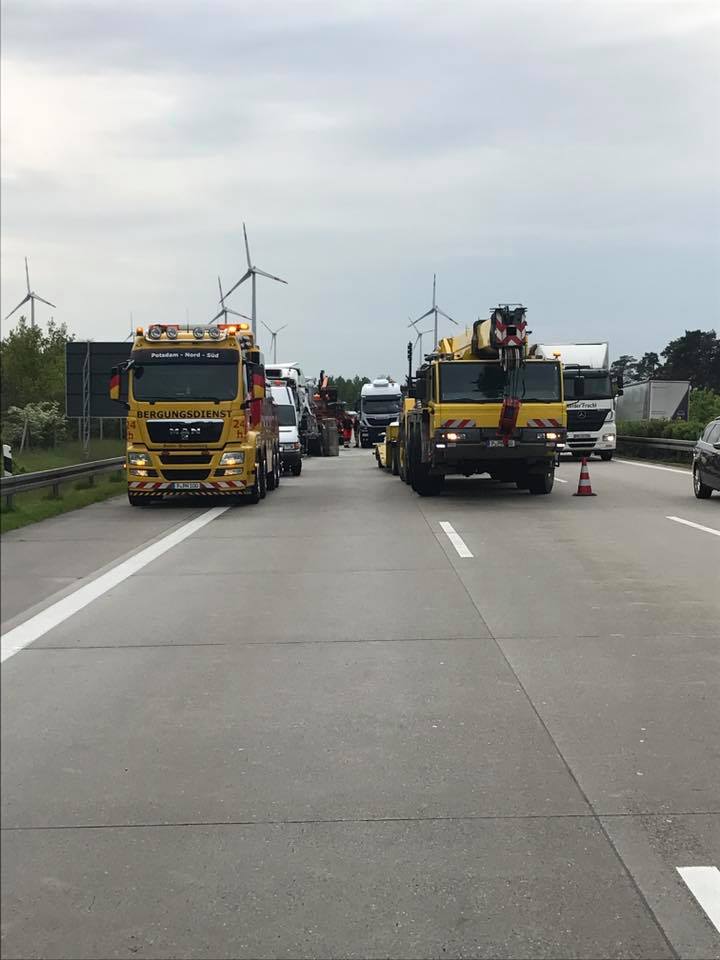


Your partner for professional motorway & large-area operations in Potsdam

Whether it’s a breakdown, accident, a stuck vehicle, or a technical fault
we provide fast, safe, and professional assistance on motorways and express roads in the greater Potsdam area.

Reliable. Experienced. Available 24/7.